4:00AM Wednesday Jul 01, 2009 by NZ Herald.


Auckland university researchers have written software which enables a computer to recognise rat footprints from those of other wildlife, and tell the difference between species of rats.

“By identifying rat species we can understand patterns of invasion on predator-free islands, or detect new species entering New Zealand,” biologist James Russell said.

The software can be used to read cards left on either side of an inkpad that pests walk over in tunnels placed in vulnerable sites such as predator-free islands or cargo crates.

Footprint cards are a cheap method of identifying animals, particularly ones present in low numbers, or difficult for human observers to find.

The Department of Conservation uses footprint cards but analyses them manually, and it is difficult for even experts to differentiate between species with similar-looking footprints.

Automating the footprint identification speeds up the tracking of invasive animals, and technique can be easily adapted to monitor other animals.
By developing an automated method to identify species, and extending it to any animal that leaves tracks - including reptiles and insects - researchers can help track species living in an area, said Dr Russell, who now teaches at the University of California’s Berkeley campus.

Tracking tunnels will be used on Auckland’s Rangitoto and Motutapu islands, where eradication programmes have started against all introduced animals.

- NZPA

Folks if you haven’t seen how a Diamonadback Rattle Snake prooves himself worthy of a mate, check this out. Remember to call Arizona Pest Control for rattle snake control and removal!

It’s July in the Sonoran Desert, which means monsoon season is in full swing. This seasonal change in the weather pattern sends most desert dwellers outside in the late afternoon, casting eager glances skyward in the hope of finding rain-laden thunderheads blooming on the horizon. In a state that gets only seven inches of rain per year (on average), the slightest hint of precipitation is welcomed with open arms and actual raindrops leave us downright giddy. To celebrate our annual “Monsoon Madness,” here are some interesting facts to ponder:

  • Arizona’s monsoon season begins when intense solar heating causes the air over the desert to rise. This creates low pressure near the ground that pulls up moist air from the Gulf of Mexico, temporarily changing our weather pattern. 
  • The meteorological rule of thumb is that three consecutive days with an average dew point of 55 degrees Fahrenheit or higher marks the official arrival of the monsoon season.
  • Monsoon season typically runs from early July to mid-September. 
  • A hearty monsoon-driven thunderstorm can temporarily cool the air temperature by 20 degrees or more in a matter of minutes. 
  • Dust storms, also called haboobs, often precede desert thunderstorms. Heavy winds blowing over fields and the open desert can generate enormous clouds of dust. The average wind speed of a haboob is more than 30 miles per hour and the wall of dust can reach 3,000 feet in height. Though they only last a few minutes, dust storms can quickly reduce visibility, which is particularly hazardous if you are driving (click here for dust storm safety tips).
  • Summer thunderstorms can drop more than an inch of rain in a very short period of time. Watch out for localized flooding and never try to walk or drive across a flowing wash.
  • If you’re lucky enough to be in Scottsdale and near the desert on one of our rare rainy days, step outside when the rain stops and take a deep sniff. The delightful fresh fragrance in the air is emitted by creosote bushes when their leaves get wet.

Enjoy this great footage!

http://www.ipm.ucdavis.edu/QT/spiderscard.html

To prevent spiders from entering your house, take these steps:

  • Seal home foundation cracks and other access holes
  • Inspect window and door screens for good. seals that keep out spiders and the insects they prey on.
  • Keep areas around home foundations free of clutter.

Manage spiders using these tips:

  • Indoors, regular housecleaning provides adequate spider control.
  • Vacuum up the spider and its web.
  • Prevent clutter buildup that can provide hiding places.
  • Remove spider webs from the exterior of the house with a broom or high pressure hose.
  • Indoors, squash spiders or capture them in a jar and release them outdoors.

Mosquito safety is an important thing these days with west nile virus and other mosquito born illnesses and disease ever present. Using repellents with DEET and some of the more advanced traps out there are wise choices if spending time outside or in your back yard. You can help keep mosquitoes at bay by being diligent in making sure that there is no free standing or stagnant water around your property and if you know of abandoned houses that might have old pools it is best to report that problem to your local vector control agency.

Here are some tips recommended to help protect your pets from pests during their summer:

  1. Check your pets regularly for mosquito bites, flea dirt and ticks, especially after being outdoors. Any excessive scratching, licking or grooming behavior is normally a tip-off that a bite or infestation has occurred.
  2. Be aware of tall grassy areas where fleas and ticks gather and try to avoid them.
  3. Be aware that dawn and dusk is when mosquitoes are most active, so try walking your pets outside of these parameters.
  4. Be proactive inside the home by thoroughly washing pet bedding and regular vacuuming.
  5. Consult a veterinarian about heartworm protection, as many monthly pill options exist, and before using any flea and tick treatment.
  6. If confronted with an indoor pest infestation, contact a licensed pest professional to treat the problem.

SCORPION Removal and Facts


Some important facts:
1. Most common in Greater Tucson areas:
Bark Scorpion - Centruroides Sculptaurus [Straw-pale yellow in color]

A. Also seen is the Giant Hairy Scorpion, which is much larger/darker than the much smaller and paler “Bark Scorpion”. The Bark Scorpion is very venomous, if stung, call Poison Control Center @ 626-6016, go to the nearest hospital or personal physician for antivenin treatment. Try to take scorpion with you as treatment may vary according to specie. Proper identification is very important from a medical treatment perspective.

2. Nocturnal and will be in areas around moisture or outside lights where food sources are known to gather such as beetles, cockroaches, crickets, moths, or other insects.

3. NON-CHEMICAL CONTROL: Keep wood piles away from walls, check all wood carefully before bringing into your home, remove heavy shrubbery that is growing close to the structure, remove medium to large rocks that are situated next to the structure, inspect all rocks before moving them! Seal/caulk all pipes, wiring outlets, or cracks located around the outside of the structure. Stop any water from dripping (i.e. Evaporative coolers) if at all possible as they will gather around moisture sources. Keep chimney flumes closed when not in use. Keep outside lights to a minimum. Keep doors closed after dusk and until dawn. Pay particular attention to “doggie” doors as this a very, very easy way to obtain entry. Keep sealed when animals are in the home.

4. Do NOT walk around the home during the nighttime hours with BAREFEET! Check all shoes, folded towels, dresser drawers, closets on a periodic basis for scorpions. Check molding around all in door piping and repair if any holes are present. Keep all drains (tub, shower, sinks, etc) closed or sealed when not in use as scorpions have been known to come up through the drains on rare occasions.

5. Screen (with a tight mesh screen) ALL floor level return air or heater ducts. Remove face plate, insert pre-measured screen and replace face plate.

6. ALL IT TAKES IS AN OPENING OR CRACK NO LARGER THAN 1/16TH OF AN INCH FOR A SCORPION TO GET ACCESS TO YOUR HOME!

7. CALL A PROFESSIONAL PEST CONTROL COMPANY TO PERFORM A NIGHTTIME “BLACKLIGHT SERVICE” IF INFESTATION IS DETERMINED TO BE MORE THAN A MINOR NUISANCE OR RARE OCCURRENCE.

The Blacklight program will many times reveal entry and hiding places not easily determined during daylight hours. Then a combinations of appropriate products and exclusion can be prescribed to achieve eventual elimination of this dangerous pest.

8. Never ever pick up a scorpion or any other venomous insect or reptile with your bare hands or fingers! Use appropriate tools or immediately call a professional for assistance

Dont get caught in a sticky situation like this guy!

when-animals-strike-shorts-bee-attack-horror.html

Frequently Asked Questions About Termites

Q. What can termites do to my home?
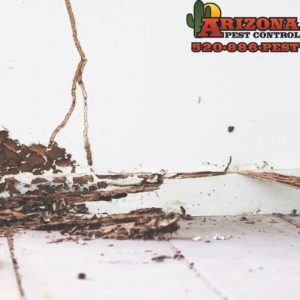
A. Termites eat wood. In their natural state, they eat fallen logs and stumps off the forest floor. But on your property, they can eat away the equity you have built up in your home and property. Termites infest millions of homes nation-wide, causing over $750 million in damage annually, according to the United States Department of Agriculture.

Q. What should I know about a termite colony?
A. Subterranean termites are native to every state except Alaska. A colony may include up to several million individuals, living as deep as 20 feet underground. Feeding on cellulose-based material, such as wood, termites find human dwellings offer the ideal combination of warmth, moisture and food. We use the latest most effective method of termite control available to our industry.

Q. How can a professional pest control firm help?
A. Only a trained professional understands the intricacies of how a termite colony behaves. Using an advanced material, such as Biflex TC or Dragnet FT termiticides, a skilled, professional applicator can effectively protect your housing investment.

Q. How do termites get in?
A. Because termites need moisture and have a low tolerance to air and light, they live underground, attacking a home from below. A loose mortar joint, a minute space around a drain pipe, or a settlement crack in the basement is all they need to gain entry.

Q. Will termites eat my stucco, concrete block, or insulation?
A. Termites obtain food from a substance called cellulose that is found in wood and plant derived products. Humans can not digest cellulose, but termites can. Termites do not feed on concrete, stucco, fiberglass, insulation, or other non-organic materials, because these materials do not contain cellulose. However, termites can tunnel through cracks or weakened areas in concrete to get to underlying wood.

Q. Aren’t homes and houses with concrete slabs virtually termite-proof?
A. The experience of homeowners nationwide shows that no home, new or old, is safe from termites. By building mud tubes, termites can cross concrete, brick, cinder block, metal termite shields, pre-treated wood, or any barrier other than a professionally-applied termite treatment.

Q. If I haven’t seen swarming termites, or traces of damage, can my home still be in danger?
A. Unfortunately, yes. When a colony swarms, the winged termites may be in the air for just a few minutes and you may not see them. Termites eat wood from the inside out, making their activity detectable only by professional termite inspection.

Q. When is the right time to call in a termite professional?
A. If you suspect you have termite call us for a free inspection. Termite treatment is a fixed cost. But the longer you delay treatment, the more damage termites will do. Repairs will become more extensive, and more expensive. Generally speaking, the sooner you approve treatment, the better control techniques can be used.

Q. How does a professional inspection uncover activity that’s invisible to me?
A. While much termite damage is hidden, termites have few secrets to the eyes of a professional. He knows the conditions termites favor, and how to uncover termite activity which the untrained eye might pass over–with damaging results.

Q. What will a professional do to get rid of the termites?
A. Create a barrier between your home and the termites, blocking them from your property. Treatment begins with a thorough inspection. Then, an analysis of your home and property. Finally, applying various materials and techniques to effectively eliminate termites.

Q. How will you achieve this invisible barrier?
A. Methods vary with each house, depending on the type of foundation or basement, construction materials, number and type of porches, patios, chimneys, etc. By digging narrow trenches along walls and drilling through horizontal surfaces and into voids, materials can be applied where they will kill termites within your home and block the colony’s re-entry.

Q. Won’t this kind of thorough treatment be a lot of trouble?
A. No. Modern termite control treatment will usually take a single day, or less, with very little upset to your daily routine. This depends on the size of property to be treated. You get what you pay for in this industry and you deserve the best service around.


We are one of the few local companies who offer the SENTRICON COLONY ELIMINATION SYSTEM.

I found this video searching the web. It has some great shots of snowy Sabino Canyon in Tucson, Arizona. Hope this video gives all you Tucsonans something to hope for after these hot summer months! Enjoy the great shots…

Next Page »